
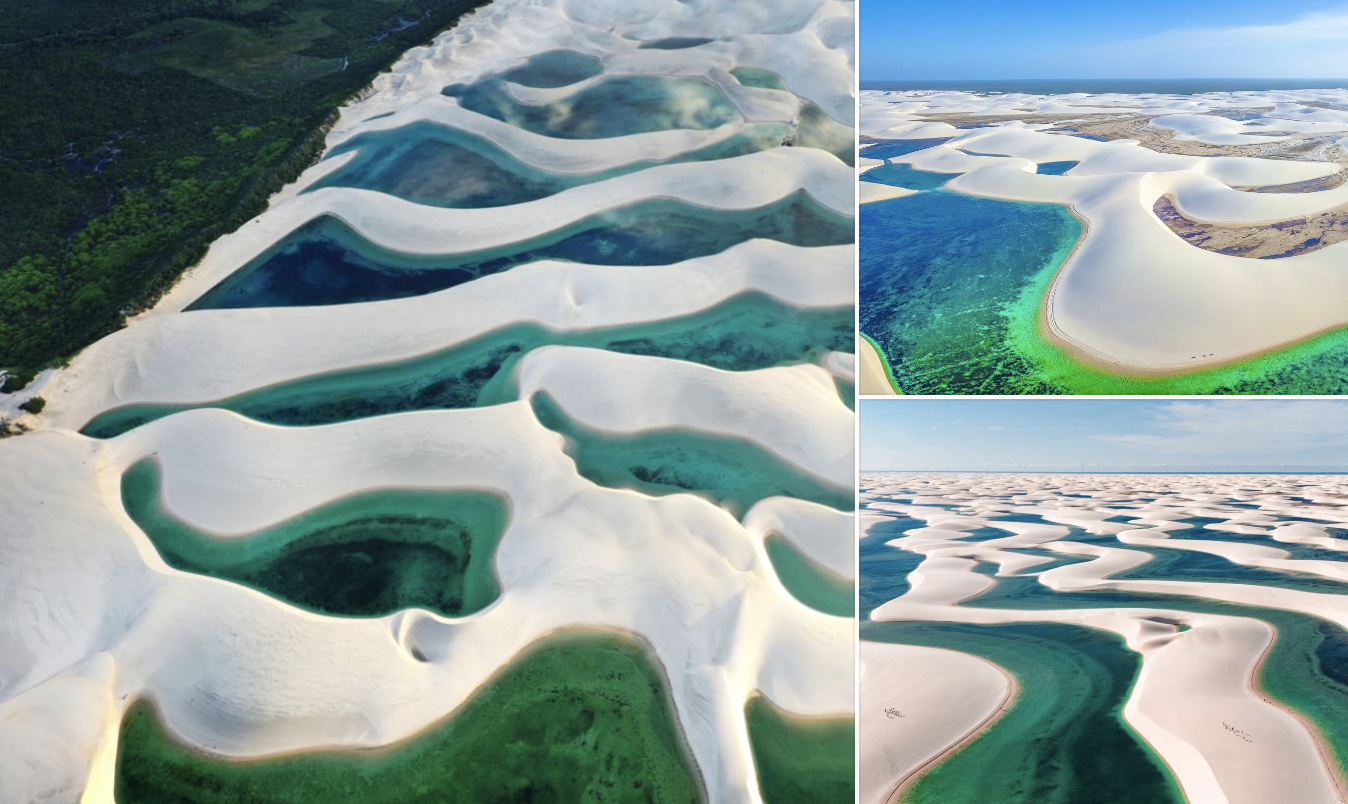
If aliens ever land on Earth and ask where they should build their vacation homes, we have a few suggestions. They can choose between a desert that looks like Mars, a salt flat that turns into a giant mirror, a volcanic landscape that appears to be melting, and an island covered in trees that look like giant umbrellas designed by a science-fiction artist having a very strange afternoon.
The best part? You don’t need a spaceship, a billion-dollar space program or Elon Musk’s phone number to visit them.
There are places on Earth so bizarre that photographs look digitally manipulated. Some have been used as movie locations for fictional planets, while others are so geologically unusual that scientists study them to better understand worlds beyond our own. NASA even researches extreme environments on Earth as analogues for conditions on Mars, the Moon and other planetary bodies. NASA’s planetary analog research is a good reminder that our own planet still has some seriously alien-looking real estate.
For travelers who have graduated from ordinary beach vacations and European city breaks, these 15 destinations offer something different: landscapes that make you feel as though you’ve accidentally stepped off Earth.
1. Wadi Rum, Jordan: The Place Hollywood Uses for Mars
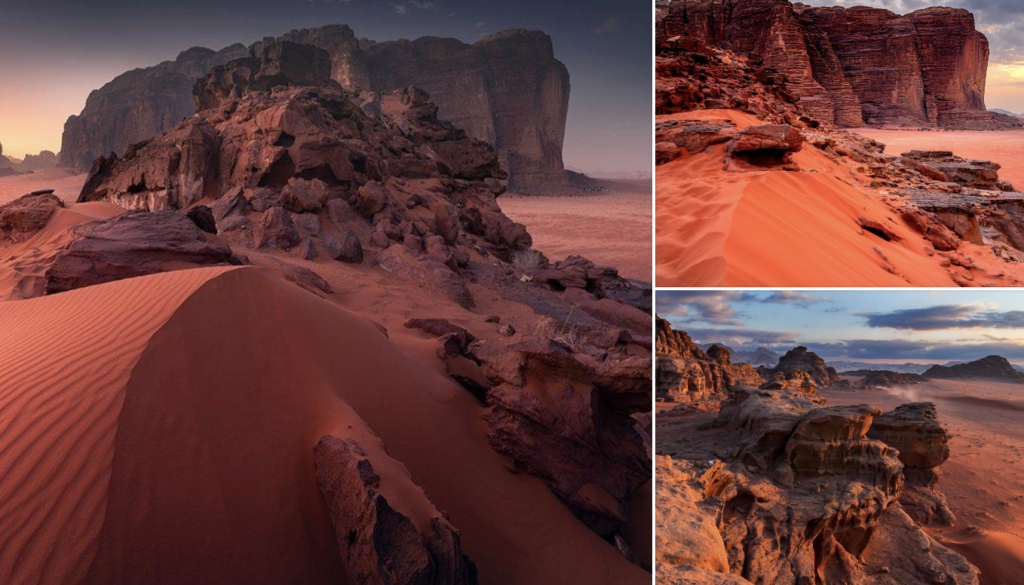
The vibe: Red desert, enormous rock formations and a science-fiction movie set without the expensive special effects.
Wadi Rum is the kind of place that makes you wonder whether somebody forgot to finish building the planet. Located in southern Jordan, this desert wilderness features towering sandstone mountains, enormous natural rock formations and vast stretches of reddish sand.
It’s not just a resemblance to Mars that makes Wadi Rum special. Filmmakers have actually used it as a stand-in for the Red Planet, including in Ridley Scott’s The Martian. NASA’s Earth Observatory explains why its iron-rich sand and sculpted rock formations make such a convincing substitute. NASA explains the connection here.
What to do: Book a guided 4×4 desert excursion, explore natural arches and rock formations, and spend a night in a desert camp beneath an extraordinary star-filled sky.
Where to stay: Compare traditional Bedouin camps with upscale desert accommodations, including bubble-style rooms where available.
Best time: Spring and autumn generally offer more comfortable conditions than the height of summer.
Budget: Moderate for basic camps; luxury desert stays can cost considerably more.
The catch: This is a desert, not a giant outdoor air-conditioned lounge. Days can be hot, nights surprisingly cold, and the best experiences require planning around local conditions.
Egotastic verdict: If you want the strongest combination of alien scenery, comfortable accommodation and actual vacation activities, Wadi Rum is an excellent place to start.
2. Salar de Uyuni, Bolivia: The World’s Biggest Natural Mirror
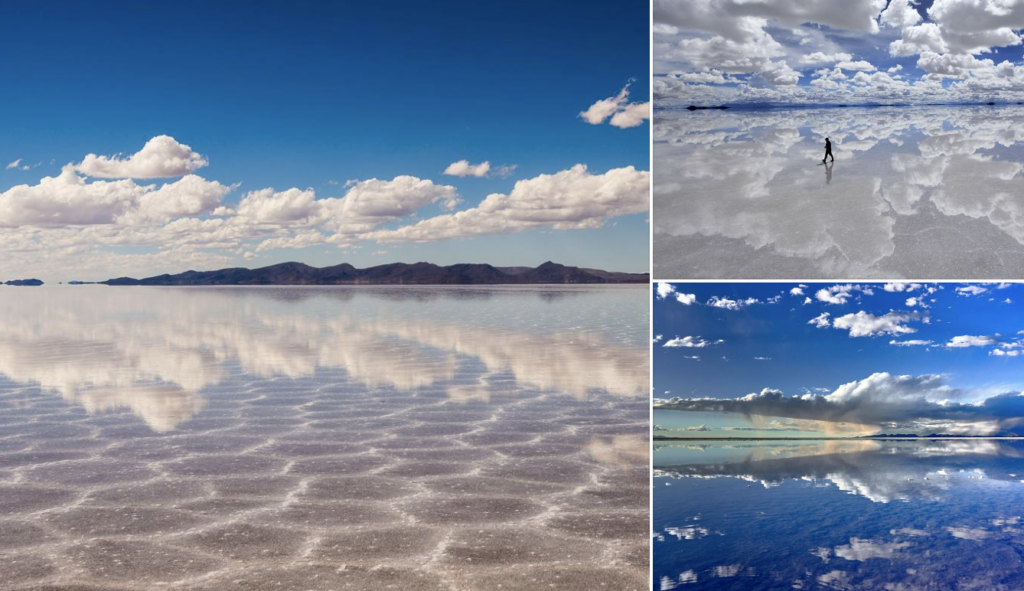
The vibe: Infinite white space with a reflection so perfect it looks like the sky has fallen over.
Salar de Uyuni is an enormous salt flat in southwestern Bolivia. During the dry season, it resembles an endless white desert. When a thin layer of water covers the surface during wetter periods, it can reflect the sky so dramatically that the horizon practically disappears.
The result is one of the strangest landscapes on Earth. Your photographs can look like you are floating between two skies, provided the weather and water conditions cooperate.
What to do: Take a guided 4×4 excursion, visit the salt formations and islands within the flats, and arrange a photography stop when reflective conditions are favorable. Multi-day tours often combine the salt flat with the colorful lagoons and high-altitude desert scenery of the surrounding region.
Where to stay: Uyuni is the usual starting point. Travelers can compare conventional hotels with distinctive salt-built accommodations in the surrounding area.
Best time: The dry season generally delivers the classic white desert, while the wetter season can produce the famous mirror effect. Neither look is guaranteed on a particular date.
Budget: Budget-friendly group tours exist, while private guides and multi-day itineraries cost more.
The catch: Altitude matters. The area sits at roughly 3,600 metres above sea level, so give yourself time to acclimatize and plan excursions accordingly.
Egotastic verdict: Few destinations offer such an extraordinary photographic payoff. Just remember that a drone shot of you pretending to walk on the sky is not a substitute for actually enjoying the place.
3. The Atacama Desert, Chile: Mars Without the Long Flight
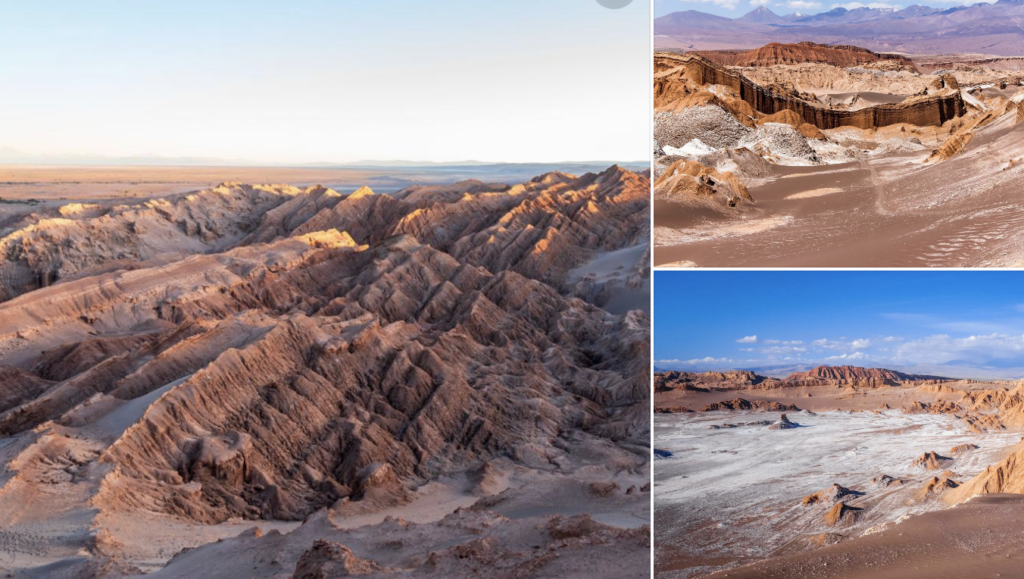
The vibe: Rust-colored mountains, bone-dry landscapes and a sky that makes you reconsider your entire relationship with city lights.
The Atacama Desert in northern Chile is one of the driest non-polar deserts on Earth. Its barren terrain, mineral-rich soils and extreme conditions have made it valuable to scientists researching how life might survive in Martian environments.
NASA has conducted research in the region to test technologies and methods relevant to future missions to Mars. See NASA’s Atacama research.
But you don’t need to be a scientist to appreciate the landscape.
What to do: Use San Pedro de Atacama as a base for guided excursions to the Valle de la Luna, salt flats, high-altitude lagoons and desert viewpoints. Stargazing tours are another major attraction thanks to the region’s exceptionally dark skies.
Where to stay: San Pedro has everything from simple hostels to design-focused desert lodges.
Best time: The desert can be visited throughout the year, although temperatures, altitude and seasonal conditions vary by excursion.
Budget: Moderate to expensive, depending on accommodation, private tours and high-altitude excursions.
The catch: Some of the most spectacular sights involve long drives and significant elevation. Bring sun protection, water and appropriate clothing, and don’t treat every excursion as a casual stroll.
Egotastic verdict: This is a particularly good choice for travelers who want otherworldly scenery without sacrificing restaurants, hotels and organized tours.
4. Socotra, Yemen: The Island With Alien-Looking Trees
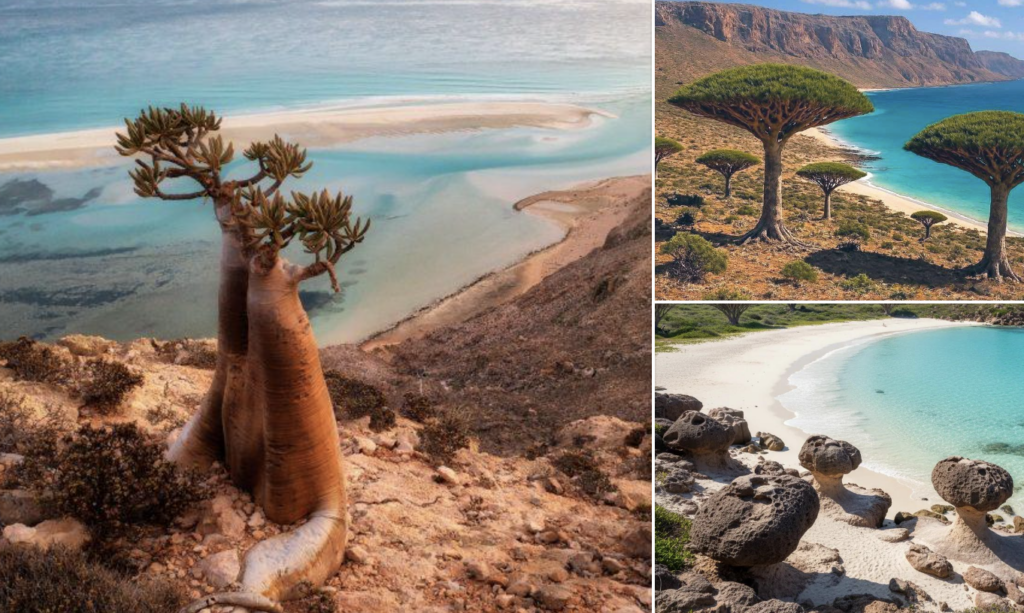
The vibe: Strange umbrella-shaped trees, rugged mountains and beaches that look like they belong in a fantasy film.
Socotra, an island in the Arabian Sea, is famous for its distinctive dragon’s blood trees, whose broad, umbrella-like canopies give the landscape an almost prehistoric appearance. Its unusual plant life and ecological isolation have made it one of the most distinctive natural environments on Earth.
The island is part of a UNESCO World Heritage site recognized for its biodiversity. Its landscape ranges from limestone plateaus to sandy beaches and mountainous interior regions.
What to do: Under normal, safely organized travel conditions, visitors are drawn to the dragon’s blood trees, coastal scenery, caves and remote beaches. Any trip should prioritize local guides and responsible environmental practices.
Where to stay: Accommodation options are limited compared with mainstream tourist destinations, and itineraries often rely on organized expeditions and camps.
Best time: The calmer travel season is generally associated with the cooler, drier months, but conditions and access must be checked with a reputable operator.
The catch: This is not a destination to book casually. Socotra is part of Yemen, and security conditions, transport availability and government travel advisories are critical. Check your government’s current advisory before considering any trip; if travel is advised against, choose another destination.
Egotastic verdict: Visually, Socotra is extraordinary. Practically, it requires far more caution than a typical island vacation. Put it on the inspiration board, but let current safety information determine whether it belongs on your actual itinerary.
5. Dallol, Ethiopia: A Neon Landscape Built by Geology
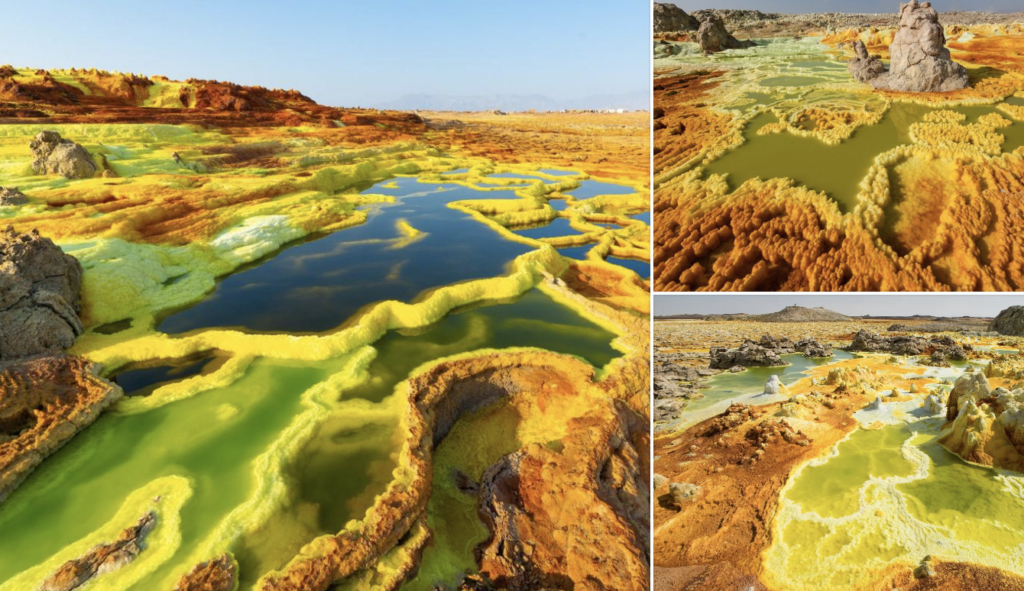
The vibe: Fluorescent yellow, vivid orange and green mineral formations that look like an alien chemical spill.
Dallol lies within Ethiopia’s Danakil Depression, an extreme geological environment known for volcanic activity, salt deposits and colorful hydrothermal formations.
The bright colors are produced by minerals and chemical processes, creating a landscape that seems almost too saturated to be real. It is visually spectacular, but this is not a place where you should wander off to investigate an interesting-looking pool.
What to do: Explore only through appropriately organized excursions with experienced local guides and current safety information. The broader Danakil region also includes dramatic volcanic landscapes and vast salt flats.
Where to stay: Most visitors arrange guided expeditions from regional bases rather than treating Dallol as a conventional hotel destination.
Best time: Cooler months are generally preferable for desert excursions, but extreme heat and local conditions still require careful planning.
Budget: Expect organized expedition costs, including transport, guides and logistics.
The catch: The environment can be dangerously hot, and acidic or mineral-rich pools may be hazardous. Regional security, access and transport must also be assessed before booking.
Egotastic verdict: Dallol might be one of the strangest-looking places on the planet, but the correct way to enjoy it is with a guide, not a selfie stick and a reckless disregard for chemistry.
6. Zhangye Danxia, China: Mountains Painted by an Artist With No Chill
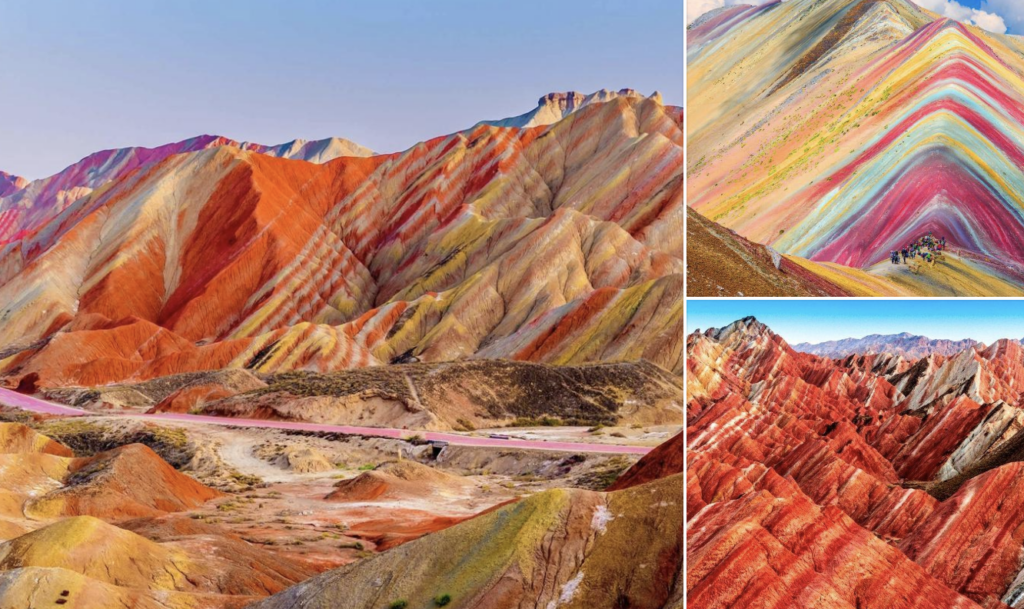
The vibe: Multicolored mountain ridges that look like somebody dragged a giant paintbrush across the landscape.
The Zhangye Danxia landforms in China’s Gansu Province are famous for their layered bands of red, orange, yellow and other mineral colors. Over geological time, sedimentary layers were deposited, altered and exposed through uplift and erosion.
The resulting formations look almost artificially striped, especially when sunlight emphasizes the different layers.
What to do: Visit the designated scenic area, use its viewing platforms and plan your visit around favorable light. The broader Zhangye region also offers access to historic sites associated with the ancient Silk Road.
Where to stay: Zhangye city is a practical base for accommodation, restaurants and organized transport to the scenic area.
Best time: Late spring through early autumn can offer comfortable conditions, although the best light depends on weather and time of day.
Budget: Generally moderate, with costs driven by accommodation, transport and tour arrangements.
The catch: The most famous viewpoints can attract substantial visitor numbers. You will also get a very different photograph under flat gray skies than you will in strong, clear light.
Egotastic verdict: For travelers who want a spectacular landscape without committing to a punishing wilderness expedition, this is one of the more accessible choices on the list.
7. Deadvlei, Namibia: The World’s Most Uncomfortable Art Gallery
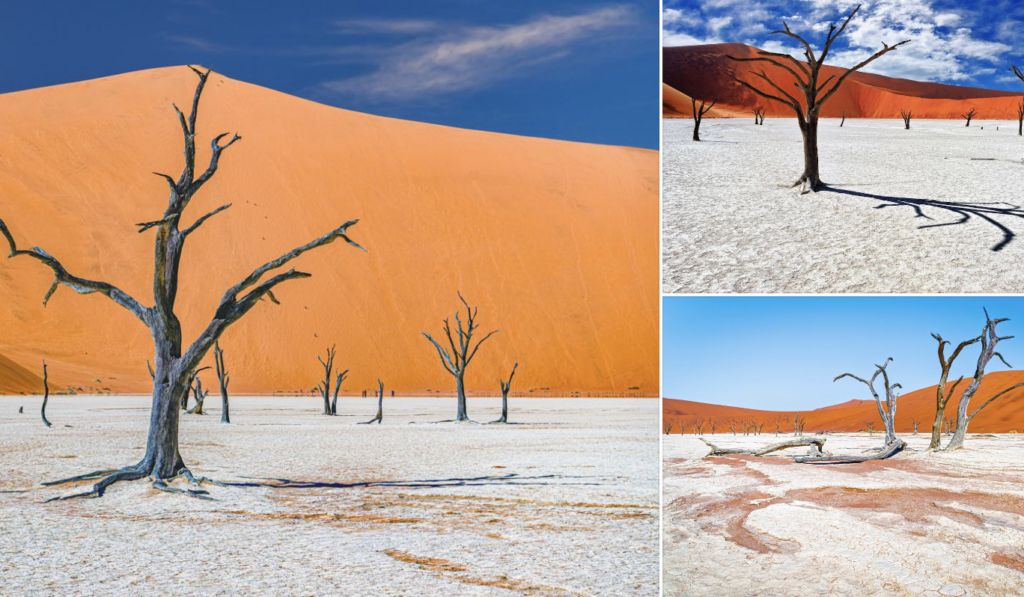
The vibe: Blackened dead trees, brilliant white clay, towering orange dunes and absolutely no need for a filter.
Deadvlei is a striking clay pan in Namibia’s Namib-Naukluft National Park. Its skeletal camel thorn trees stand against a pale ground and enormous orange-red dunes, producing a scene that feels like a surrealist painting.
The trees died after the surrounding water conditions changed, and the exceptionally dry environment has preserved their darkened remains. The contrast between the trees, white pan and dunes is the reason photographers travel from around the world to see it.
What to do: Visit Deadvlei and nearby Sossusvlei, climb designated dunes where permitted, and explore the Namib Desert with an experienced guide.
Where to stay: Look at lodges and camps near Sesriem, paying attention to park access and the timing of sunrise excursions.
Best time: The cooler, drier months are often comfortable for exploring, but early starts are valuable in any season.
Budget: Moderate to expensive, depending on lodge choice, park logistics and private transport.
The catch: Distances are substantial, the ground gets hot, and access to the final section may involve walking or specialized transport.
Egotastic verdict: If your travel philosophy is that every vacation should produce at least one photograph that makes people ask, “Where the hell is that?”, Deadvlei delivers.
8. The Danakil Depression, Ethiopia: Earth’s Extreme-Heat Adventure
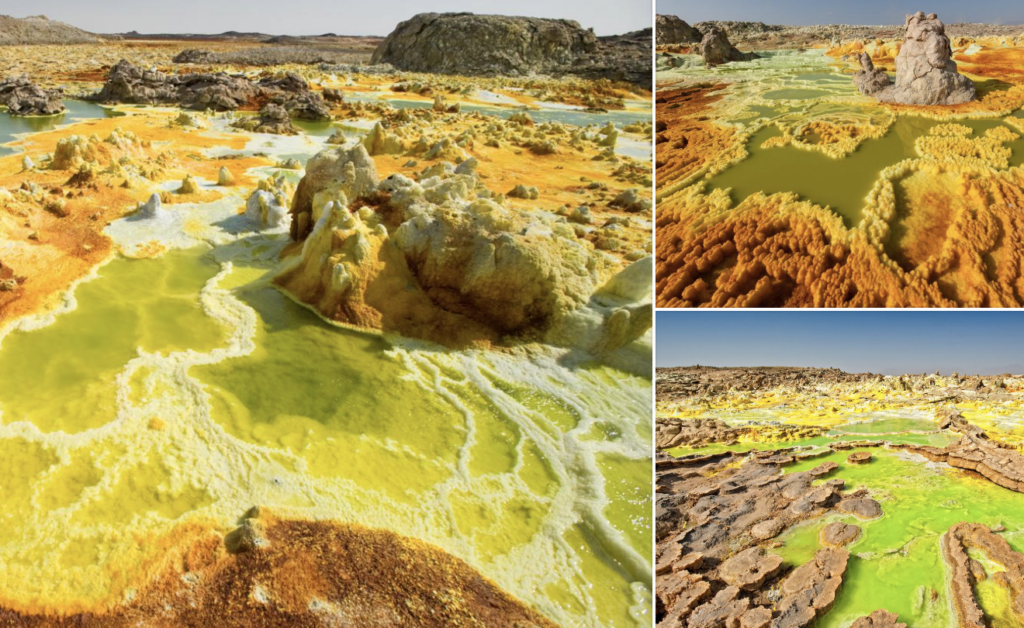
The vibe: Salt deserts, volcanoes, intense heat and a landscape that appears to be actively arguing with the idea of human comfort.
The Danakil Depression is a vast geological region in northeastern Ethiopia, extending toward the Afar Triangle. It contains salt flats, volcanic terrain and extraordinary mineral formations.
It is also one of those places where the phrase “extreme travel” actually means something. The conditions can be punishing, and access requires much more preparation than a normal sightseeing trip.
What to do: Depending on current access and safety conditions, organized expeditions may include salt flats, volcanic landscapes and geological features such as Erta Ale. Specific routes and activities must be verified before booking.
Where to stay: This is generally expedition-style travel rather than a destination built around conventional resorts.
Best time: The cooler part of the year is usually the more practical period to investigate, although daytime heat can remain severe.
Budget: Organized expeditions can be expensive relative to the basic accommodation involved because transport, guides and logistics are major costs.
The catch: Extreme temperatures, remote terrain and regional security risks are serious considerations. Never visit without reliable local guidance and current travel advice.
Egotastic verdict: The landscape is incredible. But if your idea of adventure is getting slightly lost on the way to a beach bar, this one may be better admired from a safe distance.
9. Lençóis Maranhenses, Brazil: A Desert That Fills With Lagoons
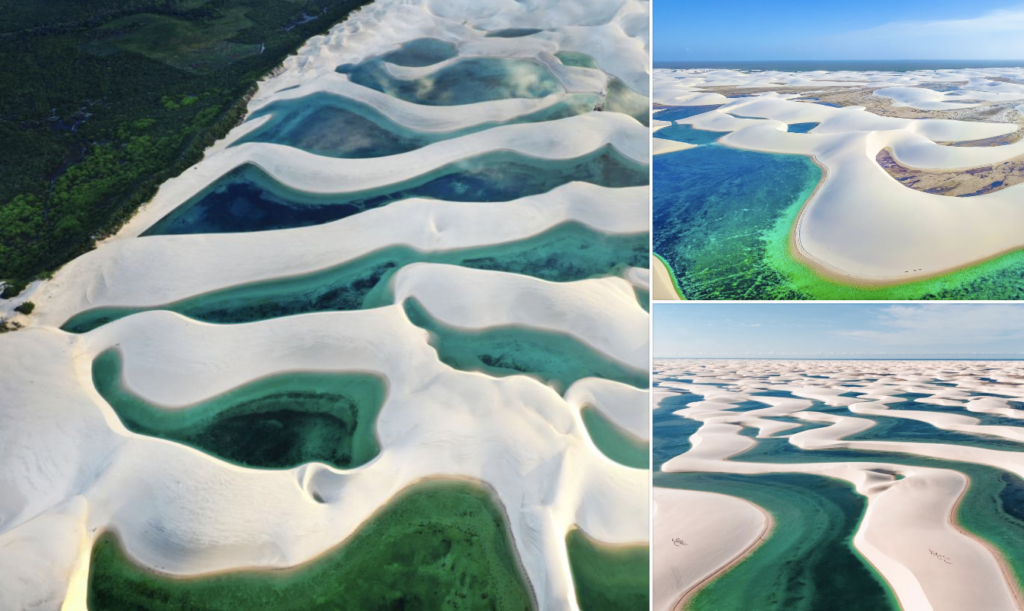
The vibe: Endless white dunes interrupted by bright blue and green freshwater lagoons.
Brazil’s Lençóis Maranhenses National Park looks like a desert, but seasonal rainfall fills the spaces between its sand dunes with temporary lagoons. The effect is extraordinary: rolling white sand punctuated by clear pools that appear to have been placed there by a very imaginative landscape designer.
The park is located in northeastern Brazil, and the lagoons change throughout the year depending on rainfall and evaporation.
What to do: Join a guided 4×4 excursion, hike across the dunes and swim in lagoons where permitted. Multi-day itineraries can explore different parts of the park and nearby communities.
Where to stay: Barreirinhas is a popular gateway, while Atins offers a more laid-back base for exploring parts of the region.
Best time: The period after the rainy season often provides the most impressive lagoons, but exact conditions vary from year to year. Check with local operators before booking.
Budget: Moderate, with guided transfers and accommodation being the main expenses.
The catch: The lagoons are seasonal, and not every pool will be full when you arrive. The dunes also involve plenty of walking under a strong sun.
Egotastic verdict: This is one of the most appealing destinations on the list for travelers who want an alien-looking landscape that also delivers an actual swimming vacation.
10. Fly Geyser, Nevada, USA: A Technicolor Accident in the Desert
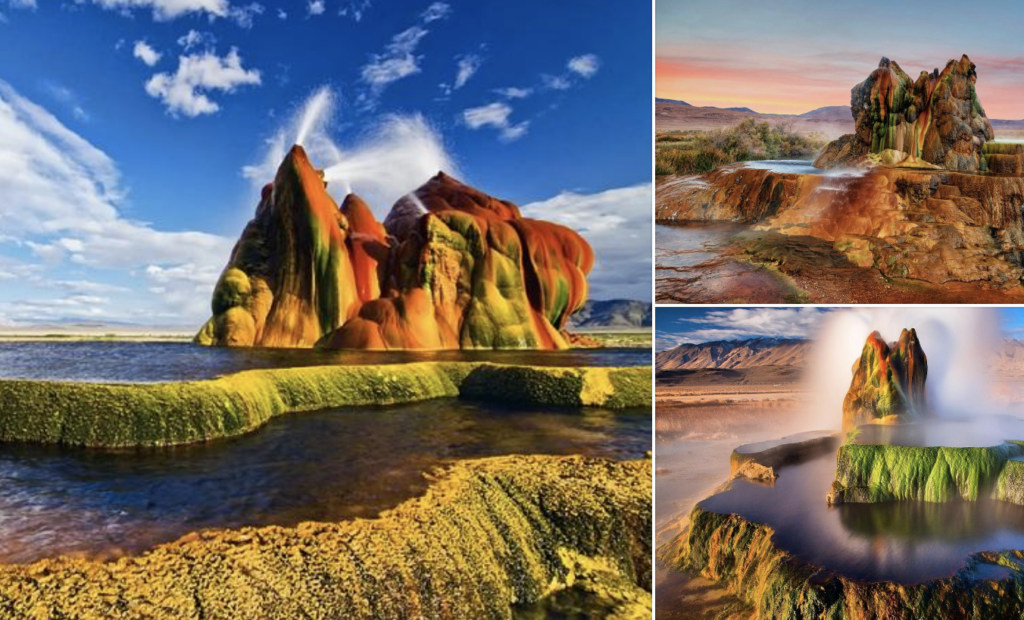
The vibe: A rainbow-colored mound of mineral deposits surrounded by a landscape that looks like it belongs in a science-fiction video game.
Fly Geyser, on private land in northern Nevada, is a geothermal formation known for its vivid colors and continuously changing mineral structures. Its development began with human drilling activity, after which geothermal water helped build the unusual formations.
The result looks like a piece of alien architecture that has been growing in the desert for decades.
What to do: Check whether guided access is available through the property’s authorized visitor programs. This is not a public roadside attraction where you can simply wander onto the land.
Where to stay: Reno can serve as a base for a broader northern Nevada trip, though driving distances and access arrangements need to be considered.
Best time: Spring and autumn are worth investigating for comfortable desert travel.
Budget: The overall trip can be moderate, but any guided-access arrangements should be confirmed directly.
The catch: Fly Geyser is on private property, and access is restricted. Do not trespass in an attempt to get the perfect photograph.
Egotastic verdict: It is a reminder that some of Earth’s weirdest attractions are not even entirely natural. Sometimes nature and human error collaborate on something spectacular.
11. Pamukkale, Türkiye: White Terraces That Look Like Frozen Waterfalls
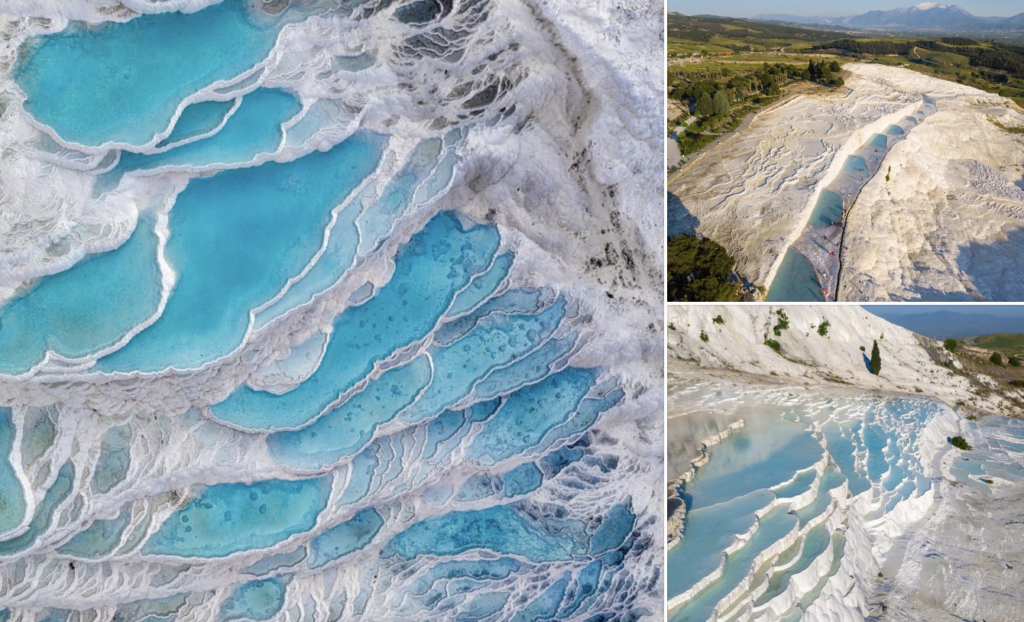
The vibe: Bright-white mineral terraces filled with turquoise water, cascading down a hillside.
Pamukkale, in southwestern Türkiye, is famous for its travertine terraces formed by mineral-rich thermal waters. The white formations resemble frozen waterfalls or a giant staircase carved from snow.
Nearby Hierapolis adds another layer to the visit, with the remains of an ancient Greco-Roman city and archaeological sites that make this more than a quick photo stop.
What to do: Walk through permitted sections of the terraces according to local rules, explore Hierapolis and investigate the area’s thermal-water experiences.
Where to stay: Pamukkale village offers convenient access, while Denizli provides a broader range of accommodation and transport options.
Best time: Spring and autumn are attractive for sightseeing, with summer bringing greater heat and visitor numbers.
Budget: Moderate, depending on accommodation, transport and which thermal experiences you choose.
The catch: The terraces are a protected natural attraction. Access is controlled, and visitors should follow rules intended to protect the formations.
Egotastic verdict: This is one of the more accessible alien-looking destinations for travelers who want unusual scenery without venturing into an extreme wilderness.
12. The Giant’s Causeway, Northern Ireland: A Coastline Made of Giant Puzzle Pieces
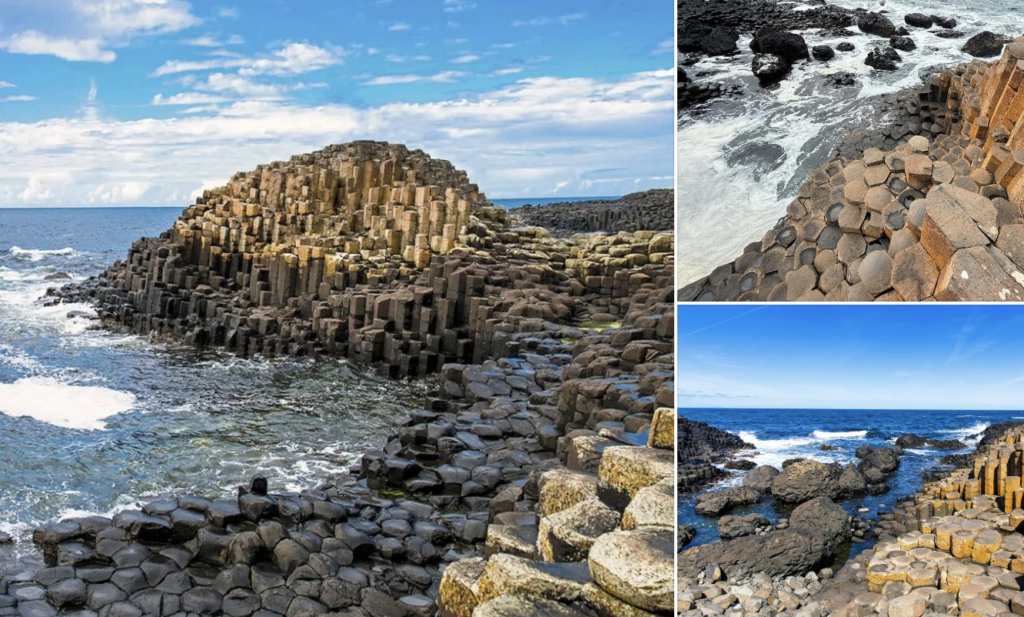
The vibe: Thousands of geometric stone columns stacked along a rugged coastline.
The Giant’s Causeway on Northern Ireland’s north coast consists of thousands of mostly hexagonal basalt columns formed by ancient volcanic activity and the cooling of lava.
The formations fit together so neatly that the traditional stories about giants building a crossing into Scotland suddenly seem like a perfectly reasonable explanation.
What to do: Walk the coastal paths, explore the basalt columns and combine the visit with nearby coastal attractions and historic sites.
Where to stay: Bushmills and the surrounding north coast offer guesthouses, hotels and country-house accommodations.
Best time: Late spring through early autumn can offer longer daylight hours, but the coast has a year-round appeal.
Budget: Moderate, with the main costs being accommodation, transportation and any tours you add.
The catch: Northern Ireland’s weather can change quickly. Wear suitable footwear and take care on exposed, slippery coastal paths.
Egotastic verdict: It’s a geological oddity with a strong story, excellent coastal scenery and a relatively easy place to include in a wider road trip.
13. The Spotted Lake, British Columbia, Canada: A Lake With Polka Dots
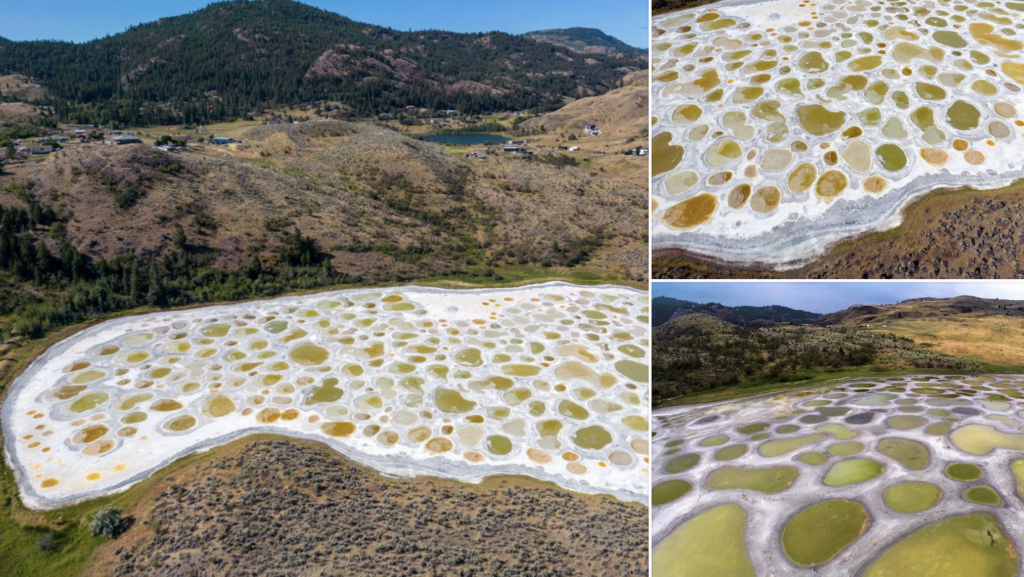
The vibe: A lake covered in strange circular patches of different colors, as though someone spilled a box of giant watercolor paints.
Near Osoyoos in British Columbia’s Okanagan Valley, Spotted Lake is a saline lake known for its distinctive mineral-rich spots that become especially visible as water levels fall during warmer months.
Its appearance changes with seasonal conditions and mineral concentrations, creating a landscape unlike a typical Canadian lake.
The lake is culturally significant to the Syilx/Okanagan people, and access to the property is restricted. Visitors should respect the site rather than attempting to enter it for photographs.
What to do: Learn about the lake from public viewpoints where available, explore the Okanagan’s wineries and hiking areas, and plan a broader regional trip.
Where to stay: Osoyoos has resorts, motels and vacation rentals, making it a convenient base for the southern Okanagan.
Best time: Summer is often when the spots are most visible, depending on water levels and conditions.
Budget: Flexible, from affordable motels to lakeside resorts and wine-country stays.
The catch: You cannot assume you can walk onto the lake or access the property. Respect local restrictions and Indigenous cultural significance.
Egotastic verdict: A reminder that you don’t always need an international flight to find something that looks like it belongs on another planet.
14. The Icelandic Highlands: A Volcanic World of Black Sand and Neon Mountains
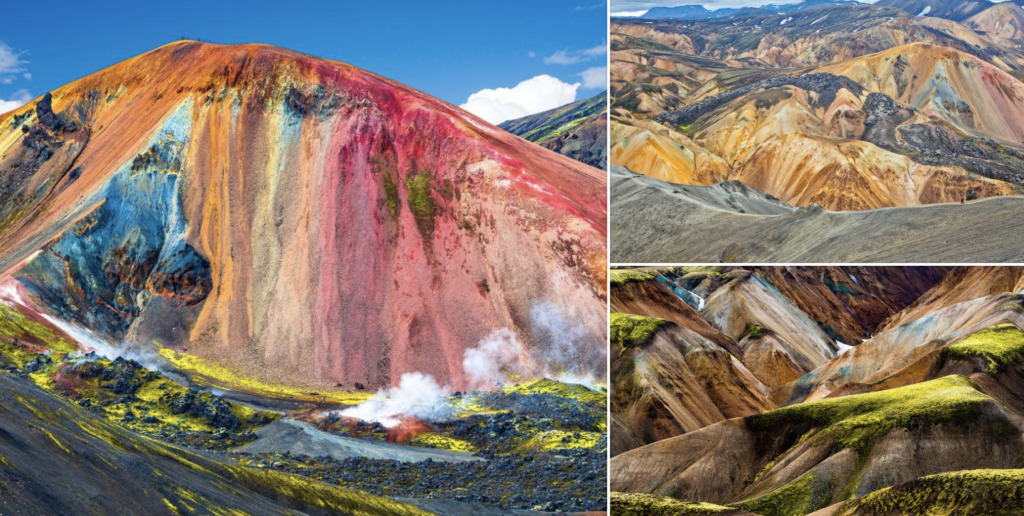
The vibe: Black deserts, colorful rhyolite mountains, lava fields and steaming geothermal terrain.
Iceland is already famous for dramatic landscapes, but the Highlands take things to another level. Around areas such as Landmannalaugar, volcanic formations produce striking colors, while the surrounding terrain includes lava fields, black sand and geothermal features.
The landscape can change dramatically over short distances, making the Highlands feel less like a conventional road trip and more like an expedition through several different worlds.
What to do: Hike designated trails around Landmannalaugar, explore volcanic scenery and arrange guided excursions to remote areas. The Laugavegur trekking route is a major draw for experienced hikers.
Where to stay: Depending on the route, options include mountain huts, campsites and accommodations on the outskirts of the Highlands. Reservations may be essential during the main hiking season.
Best time: Access to many Highland routes is seasonal, typically concentrated in summer. Opening dates depend on weather and road conditions.
Budget: Moderate to expensive once vehicle rentals, guided excursions, accommodation and specialized transport are included.
The catch: Many roads require appropriate vehicles, and some routes are unsuitable for ordinary rental cars. Conditions can change quickly; check official road and weather information before setting out.
Egotastic verdict: This is the choice for travelers who want alien scenery with serious hiking potential. Just don’t assume that because a road appears on a map, your rental car is qualified to drive it.
15. Cappadocia, Türkiye: Fairy Chimneys and Underground Cities
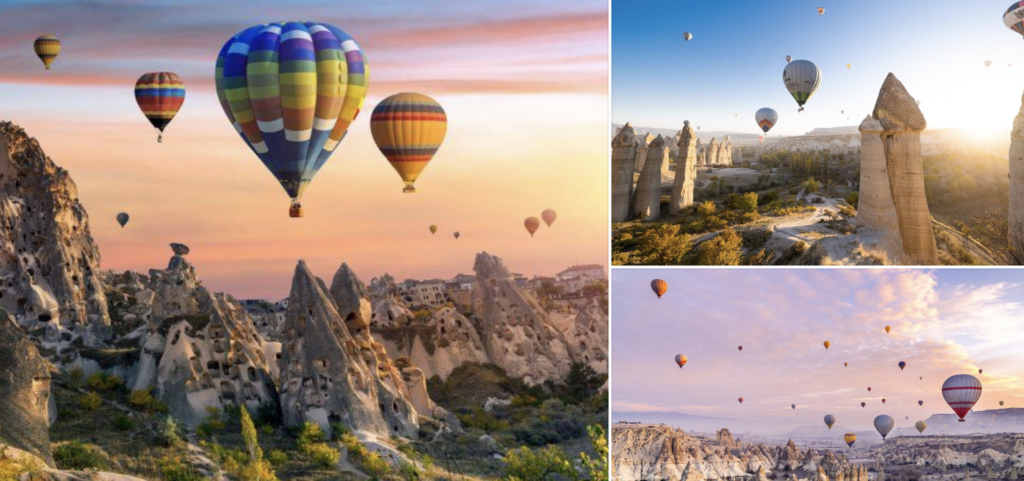
The vibe: Rock formations shaped like giant mushrooms, cave dwellings carved into cliffs and hot-air balloons drifting over a surreal landscape.
Cappadocia’s unusual terrain was created through volcanic deposits and centuries of erosion. The result is a landscape of rock spires, valleys and formations often called fairy chimneys.
People have also carved homes, churches and other structures into the soft rock, creating a remarkable combination of geology and human ingenuity. The region’s underground cities add an entirely different dimension to the experience.
What to do: Explore Göreme Open-Air Museum, hike through the valleys, visit underground cities with a guide and consider a hot-air balloon flight with a reputable licensed operator.
Where to stay: Göreme and nearby towns offer cave hotels ranging from simple guesthouses to luxurious boutique properties.
Best time: Spring and autumn are popular for comfortable sightseeing. Balloon flights are weather-dependent and may be cancelled when conditions are unsuitable.
Budget: Moderate to expensive depending on hotel category, guided tours and balloon flights.
The catch: The balloon experience is popular, so book ahead and allow flexibility in case of cancellations. The famous viewpoint at sunrise can also be busy.
Egotastic verdict: Cappadocia may be the most versatile destination on this list: unusual landscapes, history, great photography, distinctive hotels and activities that go beyond looking at rocks.
So, Which Alien-Looking Destination Should You Actually Visit?
The right choice depends on whether you want an extreme adventure or an unusual landscape with a comfortable hotel and a good restaurant waiting at the end of the day.
For the easiest combination of spectacular scenery and organized tourism, start with Cappadocia, Pamukkale or Wadi Rum. If photography is your main goal, investigate Salar de Uyuni, Deadvlei and Lençóis Maranhenses. If you want something more adventurous, the Atacama Desert and Icelandic Highlands deserve serious consideration.
For the more remote or hazardous locations, including Socotra and the Danakil region, current travel advisories and local conditions should determine whether a visit is appropriate at all.
Before booking, compare flights, accommodation, tours and transfers together. A cheap flight can become an expensive vacation when the destination requires private transport, specialized guides or several nights in remote locations. Travel insurance should also cover your intended activities and any medical evacuation requirements.
The larger point is that you don’t have to leave Earth to experience a place that feels completely unfamiliar. Our planet has salt flats that become mirrors, deserts that resemble Mars, lakes with strange mineral patterns and mountains that look as though they were painted by hand.
You could spend your next vacation at another perfectly pleasant beach resort. Or you could stand in the middle of a landscape that makes you question whether your tour guide has accidentally driven you onto the wrong planet.
Personally, the second option sounds considerably more interesting.
EGOTASTIC QUICK TAKE
Best overall: Wadi Rum, Jordan.
Best for photography: Salar de Uyuni, Bolivia.
Best for science-fiction scenery: Atacama Desert, Chile.
Best unusual swimming destination: Lençóis Maranhenses, Brazil.
Best for a comfortable adventure: Cappadocia, Türkiye.
Best for Canadian travelers: Spotted Lake and the Okanagan Valley, British Columbia.
Best for serious adventurers: The Icelandic Highlands.
Budget: From a relatively affordable regional trip to a more expensive multi-day expedition.
Worth it? Absolutely. These destinations offer something ordinary vacations often don’t: the feeling that you’ve discovered an entirely different world without ever leaving this one.
Leave a Reply