
Some vacations are built around museums, some around beaches, and some around pretending you’re going to hike before spending the afternoon beside a hotel pool. But the best kind of trip might be the one where the itinerary is basically breakfast, a market, a suspiciously long lunch, cocktails, street food, and dinner somewhere you spent three months trying to book.
Welcome to the food vacation: the kind of trip where you plan your day around what you’re eating, walk ten miles without noticing, and return home needing a vacation from your vacation.
These 15 cities deliver the goods, whether you’re chasing Michelin stars, legendary street food, pasta that makes you question every restaurant back home, or a perfect little pastry that ruins your ability to enjoy ordinary breakfast forever.
1. Lima, Peru — The City That Can Ruin You for Ordinary Seafood

If you think you like ceviche, Lima is where you discover whether you actually like ceviche or merely tolerate the stuff served in a plastic container at a restaurant with a margarita machine.
Peru’s capital has become one of the world’s most exciting culinary destinations, blending Pacific seafood, Indigenous ingredients, Chinese-Peruvian chifa cooking, Japanese influences, and ambitious restaurants that treat the country’s geography like an edible treasure chest.
Start with ceviche: fresh fish dressed with lime, chile, onion, and the sharp, addictive juice known as leche de tigre. Move on to causa, a chilled potato dish layered with fillings, and lomo saltado, the glorious collision of stir-fried beef, vegetables, rice, and fries. Yes, fries. Peru understands that sometimes a meal needs a little extra commitment.
Then there’s the fine dining. Lima has restaurants that attract international food obsessives, but you don’t need a four-hour tasting menu to eat brilliantly here. Local cevicherías, neighborhood restaurants, bakeries, and markets offer plenty of reasons to abandon your sightseeing schedule.
The move: Spend the morning exploring Barranco, have a serious seafood lunch, and dedicate dinner to a restaurant you’ve been researching since you booked the flight.
Egotastic verdict: Come for the food, stay because your flight home suddenly feels like a terrible idea.
2. Bangkok, Thailand — A City That Never Stops Feeding You

Bangkok is the place where your stomach starts making decisions before your brain has finished waking up.
Breakfast can be rice porridge, grilled pork skewers, or a bowl of noodles from a street stall. Lunch might involve green curry, papaya salad, or pad kra pao, that magnificent combination of stir-fried meat, basil, chiles, and rice. Dinner is an invitation to explore another neighborhood, and late-night snacks are practically mandatory.
The beauty of Bangkok is that great food exists at almost every price point. A humble street-side operation can deliver a meal you’ll remember longer than the expensive dinner you once had in a restaurant with a dress code and a tiny decorative plant on the plate.
Explore Chinatown’s Yaowarat Road after dark, where seafood grills, noodle stalls, and dessert shops create an edible obstacle course. Wander through markets, investigate local curry shops, and try mango sticky rice when the fruit is in season.
Of course, Bangkok also has a sophisticated fine-dining scene, with chefs reimagining Thai traditions and regional recipes. You can spend serious money here if you want to. You can also eat ridiculously well without making your bank account file a complaint.
The move: Book a food tour early in your trip, then revisit the neighborhoods and dishes you can’t stop thinking about.
Egotastic verdict: Bangkok is what happens when a city treats eating as a full-time job and absolutely refuses to clock out.
3. Mexico City, Mexico — Tacos, Tortas, and the Art of Eating All Day

Mexico City doesn’t need to convince you that food is important. Just stand beside a busy taco stand for five minutes and watch a line of locals patiently wait for something that costs less than your airport coffee.
The city’s culinary culture is enormous, layered, and wonderfully regional. Street vendors, traditional fondas, neighborhood bakeries, markets, contemporary restaurants, and high-end tasting menus all coexist in a metropolis that could keep a hungry traveler occupied for weeks.
Start with tacos al pastor: marinated pork shaved from a rotating spit, usually topped with onion, cilantro, salsa, and sometimes pineapple. Then investigate suadero, carnitas, quesadillas, tlacoyos, and tortas. Your only real challenge is figuring out how to eat everything without needing to lie down on a park bench afterward.
Markets such as Mercado de San Juan and Mercado de Coyoacán provide a deeper look at ingredients and everyday food culture. Meanwhile, Roma, Condesa, and Polanco offer everything from stylish cafés to destination restaurants.
And don’t leave without trying a proper Mexican breakfast. Chilaquiles, huevos rancheros, and tamales are excellent reasons to make your hotel breakfast package someone else’s problem.
The move: Spend a day eating your way through several neighborhoods rather than trying to conquer the whole city in one heroic taco marathon.
Egotastic verdict: Mexico City is dangerous for anyone who thinks they’ll only have a couple of tacos.
4. Tokyo, Japan — The Restaurant Reservation Becomes the Itinerary

Tokyo is a city where you can build an entire vacation around a single category of food and still barely scratch the surface.
One morning, you’re eating tamagoyaki and seafood around the Tsukiji Outer Market. That afternoon, you’re comparing ramen shops. The next night, you’re sitting at a tiny sushi counter watching a chef turn seasonal ingredients into something so precise you briefly reconsider every decision you’ve ever made in a kitchen.
Then there are yakitori joints, tempura specialists, soba shops, izakayas, department-store food halls, neighborhood bakeries, and convenience stores that make grabbing a quick snack feel like a legitimate culinary excursion.
Tokyo’s extraordinary range is the real attraction. You can find casual bowls of noodles, regional Japanese specialties, inventive contemporary cuisine, and elaborate omakase experiences. The expensive options are spectacular, but you don’t need to spend a fortune to eat well.
Explore the food stalls and shops around Tsukiji, investigate the ramen scene, and leave room for Japanese sweets, fluffy pancakes, and seasonal desserts. Even buying a snack at a train station can become a small event.
The move: Choose a few meals worth booking in advance, then leave gaps in your schedule for spontaneous discoveries. Tokyo rewards curiosity.
Egotastic verdict: You came to see Japan. Tokyo’s restaurants will politely suggest that you stay indoors and eat instead.
5. Osaka, Japan — The Official Headquarters of Eating Until You Give Up

Tokyo is precision. Kyoto is refinement. Osaka is the friend who orders another round of food when everyone else is already undoing their belts.
The city’s famous food culture has a nickname, kuidaore, commonly understood as eating oneself into financial ruin or excess. Osaka has apparently decided that this is a perfectly respectable tourism strategy.
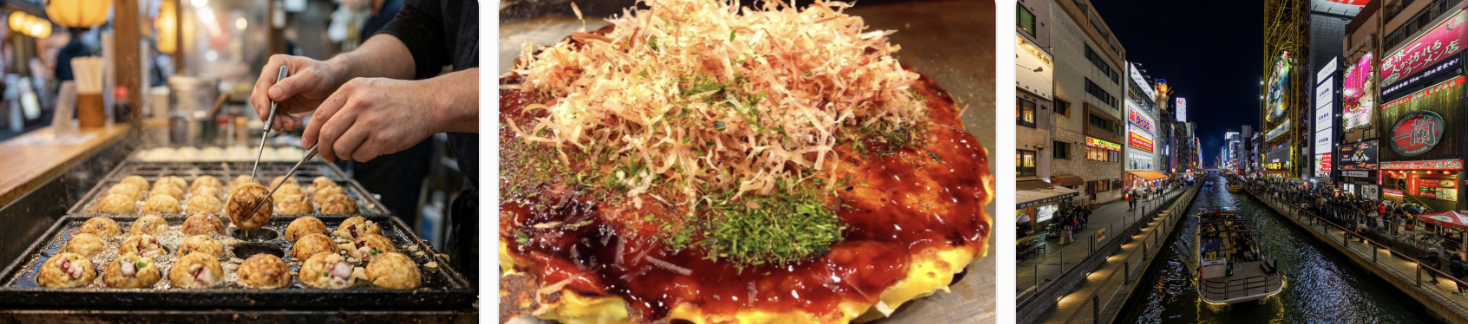
Start with takoyaki, the hot, round batter balls filled with octopus, then move on to okonomiyaki, a savory pancake loaded with cabbage and other ingredients. Add kushikatsu, skewered and deep-fried food, and udon or ramen when you need something comforting.
Dotonbori is the obvious place to begin. Its glowing signs, busy restaurants, and riverside crowds make it a spectacle even before you’ve ordered anything. But venture beyond the most photographed streets and you’ll find neighborhood eateries, local specialties, and casual restaurants that are just as compelling.
Osaka is also a brilliant city for food-hopping because many signature dishes are designed for sharing or eating in relatively small portions. You can try several things in one outing rather than committing to one enormous dinner.
The move: Spend an evening walking through Dotonbori and nearby streets, ordering small portions as you go. Bring comfortable shoes and a flexible waistband.
Egotastic verdict: Osaka isn’t asking whether you’re hungry. It’s asking why you stopped eating.
6. Ho Chi Minh City, Vietnam — The Best Meals May Come With a Plastic Stool

Ho Chi Minh City is a paradise for travelers who believe the best way to understand a place is to sit down, point at something delicious, and hope they ordered enough of it.
The food scene is built around fresh herbs, bright flavors, crisp textures, broths, grilled meats, and the kind of balancing act that makes every bite feel lively. A bowl of pho can be deeply comforting; a bánh mì can be a masterclass in contrasting textures; and a plate of broken rice with grilled pork can become the highlight of an otherwise ordinary afternoon.
Street food is central to the experience. Vendors cook beside busy roads, customers sit on low stools, and the city carries on around them. The setting may be casual, but the food often reflects years of practice and a strong sense of local tradition.
Explore the areas around Bến Thành Market, wander into smaller streets, and seek out cơm tấm, fresh spring rolls, bánh xèo, and Vietnamese coffee. The latter deserves its own paragraph, particularly if you enjoy coffee strong enough to make your thoughts arrive early.
Ho Chi Minh City also has a growing contemporary dining scene, so travelers can mix humble street meals with more elaborate restaurant experiences.
The move: Take a guided street-food walk near the start of your trip, then use what you’ve learned to explore independently.
Egotastic verdict: The dress code is casual, the stools are tiny, and the food can be extraordinary.
7. Bologna, Italy — A City That Takes Pasta Personally

Bologna is not interested in your opinion that you make a pretty good pasta sauce at home.
This is a city where food traditions run deep, markets are serious business, and regional specialties have been perfected over generations. Come hungry, because Bologna’s greatest hits aren’t designed for people who consider a side salad a satisfying dinner.
Start with tagliatelle al ragù, the local pasta-and-meat-sauce classic. Try tortellini served in broth, investigate mortadella, and make room for lasagne verdi. The city’s reputation for rich, comforting food is well earned.
The historic center is ideal for wandering between bakeries, delicatessens, markets, cafés, and traditional trattorias. You can spend the morning browsing food shops, enjoy a long lunch, and return to the streets for aperitivo before dinner.
Bologna also makes an excellent base for exploring the wider Emilia-Romagna region, famous for ingredients and products including Parmigiano Reggiano, traditional balsamic vinegar, and prosciutto. But you don’t need to leave town to understand why the region has such a formidable culinary reputation.
The move: Book a pasta-making class, browse the Quadrilatero market area, and give yourself permission to make lunch the main event.
Egotastic verdict: Bologna is the place to discover that Italian food is not one cuisine. It’s a collection of regional obsessions, and this city has several of the best.
8. Naples, Italy — A Pizza Pilgrimage With Excellent Side Quests

Naples is a city where pizza isn’t just something you eat because you’re tired and the delivery app says the driver is nearby. It’s a cultural institution.
The classic Neapolitan pizza is soft, tender, blistered by a hot oven, and built around a small number of ingredients that need to work together. Margherita is the obvious starting point, while marinara proves that a pizza doesn’t need cheese to deliver a spectacular amount of satisfaction.
But limiting your visit to pizza would be like going to Paris and only eating croissants. Naples also delivers excellent fried street snacks, pasta dishes, seafood, and pastries.
Try pizza fritta, a deep-fried pizza that is about as subtle as it sounds. Seek out sfogliatella, the layered pastry with a crisp shell and rich filling, and finish with espresso. Repeat as necessary.
The historic center is packed with places to eat, and the streets themselves are part of the experience. You can spend the day moving between pizzerias, pastry shops, coffee bars, and markets without needing a complicated transportation plan.
The move: Eat pizza at lunch, explore the old streets, then return for another round of Neapolitan specialties. A strict one-pizza-per-trip policy should be considered a human rights violation.
Egotastic verdict: Naples is for people who want their vacation to come with a side of melted cheese and zero regrets.
9. Istanbul, Türkiye — Breakfast, Bazaars, and a Very Serious Dessert Situation

Istanbul is a city that understands the importance of a meal that takes up an entire table.
Turkish breakfast alone can occupy an entire morning. There may be cheeses, olives, tomatoes, cucumbers, eggs, breads, jams, honey, and endless tea. It’s less a quick start to the day than a gentle reminder that you don’t need to rush through everything.
Then the city gets going.
Grab simit, the sesame-crusted bread ring sold throughout the city. Try döner, kebabs, pide, and lahmacun. Investigate meze, grilled fish, and the seafood restaurants along the Bosphorus. And when dessert arrives, be prepared for baklava, künefe, and Turkish delight to make a compelling argument for extending your stay.
Markets and historic neighborhoods provide a feast for the senses even before you order anything. The Spice Bazaar is an obvious stop, while the city’s cafés and traditional restaurants offer countless opportunities to slow down and watch daily life unfold.
Istanbul’s culinary identity reflects its position between continents and its long history of trade, migration, and imperial influence. The result is a food culture that feels both familiar and distinctive.
The move: Start with a traditional Turkish breakfast, spend the afternoon exploring markets and neighborhoods, and finish with a long dinner overlooking the water.
Egotastic verdict: Istanbul makes three meals a day feel like an unnecessarily restrictive government policy.
10. Singapore — The Food Court Is the Main Attraction

Singapore is one of those places where the supposedly casual meal can become the highlight of the trip.
Hawker centers are the stars. These lively food complexes bring together vendors specializing in individual dishes, from chicken rice and laksa to char kway teow, satay, and roti prata. You can sample several cuisines without making multiple restaurant reservations or crossing half the city.
The appeal is variety and focus. Many stalls concentrate on a small menu, allowing them to refine a dish over years of service. The atmosphere is relaxed, the choices are plentiful, and the prices can be refreshingly reasonable compared with those of many major global cities.
Start with a hawker center such as Maxwell Food Centre or Lau Pa Sat, then explore neighborhoods with distinctive food traditions, including Chinatown and Little India. Singapore’s multicultural population is reflected in its Chinese, Malay, Indian, and Peranakan cuisines.
For a different experience, the city also has polished cocktail bars, contemporary restaurants, and fine dining that can turn dinner into a special occasion.
The move: Make a hawker center your first stop, order small portions from several stalls, and resist the temptation to fill up on the first thing you try.
Egotastic verdict: Singapore is proof that a food court can be a destination, not merely a place to kill time before boarding your flight.
11. San Sebastián, Spain — Pintxos, Wine, and the Art of Doing Nothing Productive

San Sebastián is the kind of place where a perfectly reasonable plan to visit a beach can be derailed by a small plate of food.
The Basque coastal city is famous for pintxos, the region’s answer to tapas. These can range from simple combinations of bread and anchovies to elaborate little creations involving seafood, vegetables, meat, and sauces. The best way to experience them is to move between bars, sampling a few specialties at each stop.
The ritual is part of the fun. Order a drink, try the house favorite, chat with your companions, and move on when something else catches your eye. You are not merely having dinner; you are conducting a highly scientific investigation into the local snack economy.
San Sebastián also has a celebrated fine-dining scene, making it an appealing destination for travelers who want both casual food-hopping and ambitious restaurant experiences. Seafood is a natural highlight, and the surrounding Basque region adds even more culinary depth.
And then there is the beach. La Concha provides a gorgeous setting for walking off lunch, although you should be realistic about how much walking is possible after a lengthy pintxos session.
The move: Plan a pintxos crawl through the Old Town and leave room for a special dinner if your budget allows.
Egotastic verdict: This is where a casual snack turns into a three-hour evening, and nobody feels the need to apologize.
12. Paris, France — The City Where Even a Snack Has Standards

Paris is a dangerous destination for anyone who believes breakfast is just something you consume before the real day begins.
A good croissant, a crusty baguette, a pastry filled with cream, or a simple café breakfast can become the first of many reasons to abandon your itinerary. Then the markets, bakeries, bistros, cheese shops, wine bars, and restaurants take over.
The classic Parisian food experience doesn’t have to be an extravagant tasting menu. It can be a plate of steak frites, onion soup, a perfectly prepared omelet, or a long lunch at a neighborhood bistro. The city rewards travelers who enjoy taking their time and paying attention to ingredients.
Spend a morning visiting bakeries, explore a food market, and make time for cheese and pastries. If you enjoy fine dining, Paris offers plenty of opportunities to turn a meal into the main event. If you prefer casual eating, its cafés and neighborhood restaurants can be equally satisfying.
The trick is not to spend every meal chasing famous addresses. Some of the best moments come from finding a local spot, ordering something simple, and letting the city do its thing.
The move: Build a day around a bakery breakfast, a market visit, a leisurely lunch, and an evening bistro reservation.
Egotastic verdict: In Paris, even the bread has a publicist, and frankly, the bread deserves one.
13. New Orleans, Louisiana, USA — Butter, Spice, and a City That Knows How to Party

New Orleans is one of America’s great food destinations because the food is inseparable from the city’s music, history, and nightlife.
Start with a beignet dusted in powdered sugar and a café au lait. Then explore gumbo, jambalaya, red beans and rice, po’boys, and crawfish when they’re in season. If you have room for dessert, bread pudding and pralines are waiting to sabotage your self-control.
The city’s culinary traditions reflect French, African, Spanish, Caribbean, and other cultural influences. That history is visible in dishes that have evolved over generations and in restaurants that take local specialties seriously.
The French Quarter offers famous institutions and plenty of places to eat, while neighborhoods beyond the main tourist streets reward visitors who are willing to explore. Seafood, casual sandwich shops, bakeries, and neighborhood restaurants make it easy to eat well throughout the day.
And then there are the cocktails, live music, and late nights. New Orleans is a city where dinner can lead naturally to a jazz club, which can lead to another snack, which can lead to a discussion about whether breakfast is technically tomorrow or still part of tonight.
The move: Have a slow morning, eat a serious lunch, catch live music, and leave room for late-night food.
Egotastic verdict: New Orleans makes it very easy to confuse a culinary vacation with a lifestyle decision.
14. Oaxaca, Mexico — A Deep Dive Into Mexican Food Culture

Mexico City may be the country’s giant culinary playground, but Oaxaca is a destination for travelers who want to understand just how deep Mexican food traditions go.
The region is famous for its moles, complex sauces that can combine chiles, spices, seeds, nuts, and other ingredients. There is also tlayuda, a large crisp tortilla topped with ingredients such as beans, cheese, and meat; memelas; tamales; and an extraordinary range of local specialties.
Markets are essential to the experience. Wander through stalls selling produce, prepared foods, chocolate, spices, and regional ingredients. You can learn a great deal about a place by seeing what people buy for their kitchens and what they choose to eat when they have a quick break in the day.
Oaxaca is also known for mezcal, the agave spirit associated with the region. Tastings can be an interesting way to learn about production and local traditions, provided you pace yourself and don’t treat the experience as an Olympic event.
Cooking classes, market tours, and visits to traditional food producers can add context to all that eating. They also provide an excellent excuse to keep sampling dishes you might otherwise walk past.
The move: Combine a market visit with a cooking class and a relaxed evening exploring regional dishes.
Egotastic verdict: Oaxaca is for people who want their vacation to come with a delicious education.
15. Taipei, Taiwan — Night Markets and the Beautiful Chaos of Snacking

Taipei is a dream destination for travelers who like their meals informal, varied, and available long after sensible people have gone to bed.
Night markets are the obvious starting point. Streets fill with stalls selling dumplings, noodles, grilled meats, fried chicken, scallion pancakes, sweet treats, and countless dishes you may not recognize until someone nearby orders them.
Shilin Night Market is among the best-known, but Taipei’s food culture extends far beyond its famous markets. Explore breakfast shops, noodle restaurants, dumpling houses, tea shops, and neighborhood eateries where a simple meal can become a daily ritual.
Try beef noodle soup, xiao long bao, gua bao, and scallion pancakes. If you’re feeling adventurous, stinky tofu is one of the city’s most famous culinary challenges. Its aroma is memorable; whether that’s a compliment depends on your personal relationship with fermented food.
Taipei also has a thriving café culture and an increasingly ambitious restaurant scene, so you can balance market grazing with more polished dining experiences.
The best part is the flexibility. You can have a proper sit-down meal, then spend the evening grazing from stall to stall, stopping whenever something looks irresistible.
The move: Arrive at a night market hungry, share small portions, and make a second lap before deciding you’ve finished.
Egotastic verdict: Taipei is a city that understands a snack is not a distraction from dinner. Sometimes the snack is dinner.
How to Plan a Vacation Around Food
The secret to a great food trip is not booking the most expensive restaurant in every city. It’s mixing different experiences so you understand what makes the local food culture special.
- Book the hard-to-get meals early. If a destination restaurant is a major reason for your trip, don’t leave the reservation until the night before.
- Eat where locals eat. Busy neighborhood spots, markets, and casual restaurants often reveal more than a parade of tourist favorites.
- Leave room for spontaneity. A packed schedule can make you miss the tiny bakery, market stall, or restaurant you stumble across while wandering.
- Don’t make every meal enormous. Share dishes, order smaller portions, and spread your discoveries across the day.
- Learn a little about the food. A market tour or cooking class can make familiar dishes more interesting and unfamiliar ones less intimidating.
- Be sensible about food safety. Choose busy vendors with good turnover, pay attention to local advice, and take any dietary or allergy needs seriously.
EGOTASTIC QUICK TAKE
If your ideal vacation involves a beach chair and a frozen cocktail, we respect the commitment. But if the idea of exploring a new city through its bakeries, markets, street stalls, and restaurants sounds even better, these destinations deserve a place on your list.
For street-food energy, start with Bangkok, Ho Chi Minh City, Mexico City, or Taipei. For a deep dive into regional traditions, consider Oaxaca, Bologna, or Naples. For high-end dining mixed with everyday discoveries, Lima, Tokyo, Paris, and San Sebastián are excellent bets.
The real winner is whichever city makes you forget to check your phone because you’re too busy deciding what to eat next.
And please, for the love of your future self, don’t book a flight home immediately after dinner. You might need one more pastry.



Leave a Reply